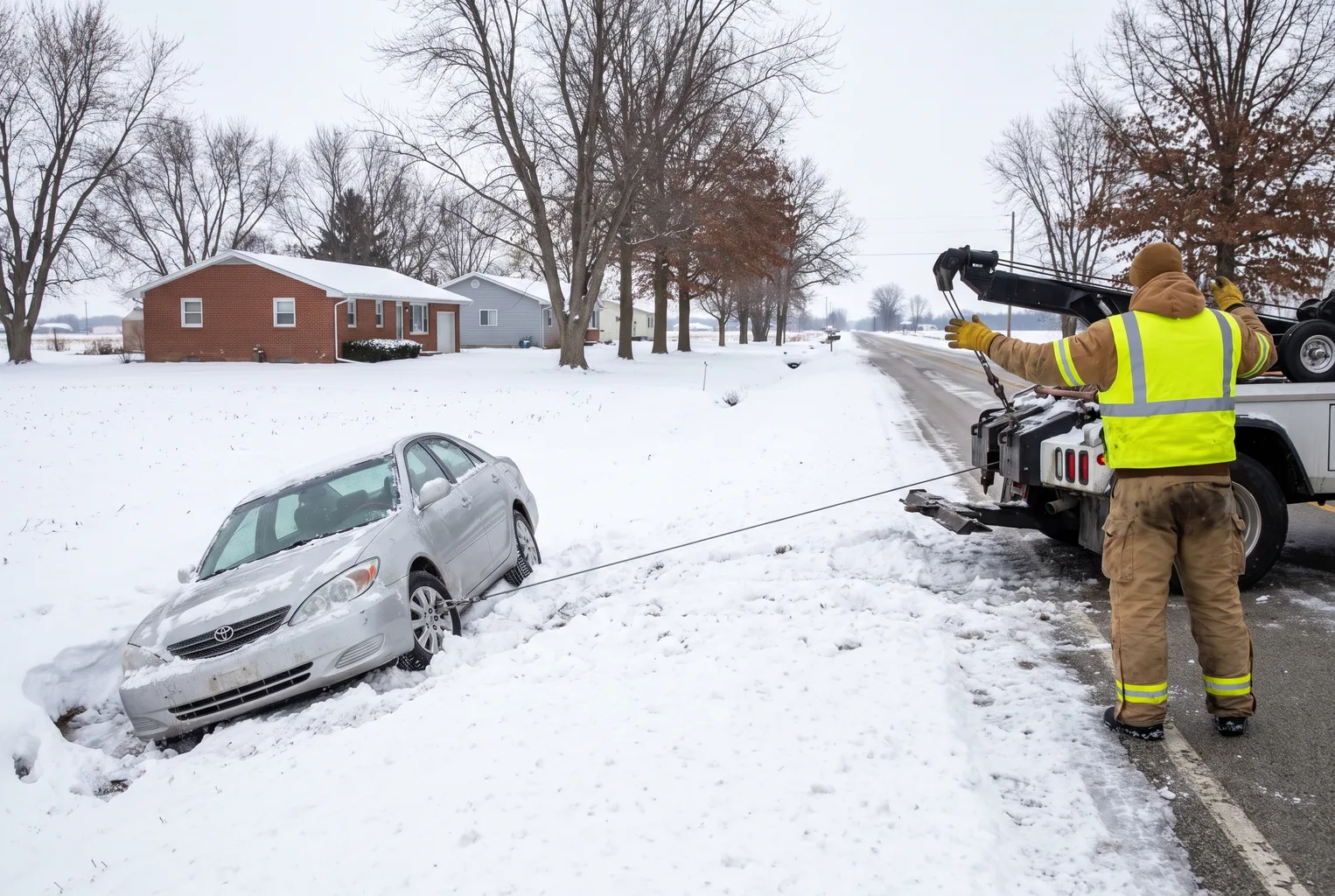
A winch-out applies when a vehicle is physically stuck rather than mechanically broken down — slid into a ditch, sunk into mud or soft ground, or high-centered after leaving the pavement. In many of these situations the vehicle runs fine; it simply cannot move itself back onto solid ground under its own power.
Fit depends on that distinction holding true: if the vehicle is stuck but otherwise operable, a winch-out alone is often sufficient. If the vehicle is also mechanically affected once freed — a common outcome after a hard slide into a ditch — towing may be needed as a following step, which is a separate matter from the recovery itself.
When seeking a winch-out, describe how and where the vehicle is stuck, the ground conditions, and any nearby trees, fencing, or structures. Those details affect the available pull angle and whether the recovery can be considered without assuming a particular method.
A limitation worth noting: winch-out recovery addresses getting the vehicle back onto solid ground. It does not include repairing any damage sustained before or during the incident that led to the vehicle becoming stuck, and it does not guarantee the vehicle will start or run normally once freed if something else was already affecting it.
Winter weather and heavy rain can leave shoulders, ditches, and low-lying areas around Youngstown and nearby Mahoning County communities soft or icy. A vehicle stuck on a rural county road presents different access details from one in a paved lot, so describe the surface and nearby obstacles when requesting recovery help.
After a vehicle is freed, do not assume it is safe to drive if the incident may have damaged a wheel, tire, or undercarriage component. In that situation, towing or a repair-shop inspection may be the more appropriate next step.
Standing water, soft mud, and packed snow can each limit access differently. Include current ground conditions in the request; exact recovery options and availability need to be confirmed directly.
Describe whether the vehicle is upright, how far it is from firm pavement, and whether any wheels are buried or hanging clear of the ground. Mention nearby drainage channels, fences, trees or retaining walls without approaching an unstable vehicle to inspect it. A narrow roadside pull and a vehicle deep in soft ground can require different planning even when both are described as being stuck.
Recovery also needs a suitable place for the vehicle to end up. Getting it out of a ditch does not by itself establish that it can join traffic or travel home. If damage is suspected, include a possible transport destination in the conversation so recovery and any later tow can be considered as separate parts of the situation.
What Winch-Out & Vehicle Recovery Involves
- Vehicles stuck in mud or soft ground
- Vehicles slid into a ditch or off the roadway
- Vehicles stuck in snow or ice
- High-centered vehicles that need to be pulled clear
- Pulling the vehicle back onto stable, drivable ground
- Does not include repairing damage sustained before or during the incident
When Winch-Out Recovery Applies
- The vehicle is stuck and spinning its wheels without gaining traction
- The vehicle has slid off a road or shoulder into a ditch
- The vehicle is sunk into mud or soft ground
- The vehicle is high-centered on a snowbank, curb or uneven terrain
What Affects the Job
- How and where the vehicle is stuck
- Ground conditions — mud, snow, ice, or uneven terrain
- Angle and distance needed to pull the vehicle clear
- Access for the recovery vehicle
- Any risk to the vehicle's undercarriage or body during the pull
- Whether nearby structures, trees, or fencing limit the angle available for the pull
How a Winch-Out Is Handled
- The vehicle's position and the surrounding ground conditions are assessed
- A safe attachment point on the vehicle is identified
- The winch line is rigged at an appropriate angle
- The vehicle is pulled back onto solid, drivable ground
Winch-Out vs. Towing
- A winch-out may fit when the vehicle is stuck but appears otherwise operable once it reaches stable ground
- Towing may be the next category when a vehicle remains mechanically affected or cannot be driven safely after it is freed
Frequently Asked Questions
Is a winch-out the same as a tow?
No. A winch-out pulls a stuck vehicle back onto solid ground. Towing moves a vehicle that cannot be driven to another location.
Can a vehicle stuck in deep mud be recovered without damage?
Ground conditions and the vehicle's attachment points are assessed before rigging the winch line, specifically to limit the risk of undercarriage or body damage during the pull.
What if the vehicle will not start after being pulled free?
A vehicle that will not start or cannot be driven safely after it is freed may need roadside assessment or towing. Recovery by itself does not establish that the vehicle is mechanically sound.
Ready to Discuss Your Project?
Review the available services and prepare the basic details of your project to request an estimate.